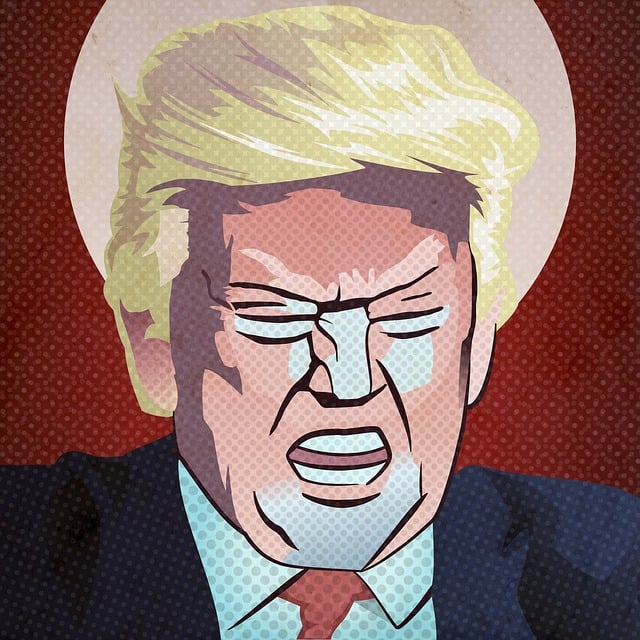
 President Trump is facing increasing resistance from Republicans in Congress to certain proposals and parts of his agenda as he nears the end of his first year back in office.
Trump remains the unquestioned leader of the Republican Party, and aides have argued that any lawmakers who fall out of line risk facing a primary or losing the president’s support.But that hasn’t stopped GOP lawmakers from criticizing Trump’s actions or rebuffing some of his demands.
A handful of Republicans bucked public pressure from the White House earlier this month to sign a discharge petition to force the release of files related to sex offender Jeffrey Epstein.That break with the White House is perhaps a sign of things to come.
Here are five other areas where Republicans are breaking with Trump.
Foreign policy
Trump has spent much of his first year back in office focused on brokering deals abroad to resolve conflicts, but his approach has frustrated different factions of the Republican Party.
The White House has touted progress on a peace agreement that could end the fighting in Ukraine nearly four years after Russian forces launched an invasion.But the initial proposal was panned by lawmakers like Sen.Mitch McConnell (R-Ky.), Sen.Lindsey Graham (R-S.C.) and Sen.Roger Wicker (R-Miss.), who raised concerns that it was too deferential to Russia and would not yield a lasting peace in Ukraine.
“If Administration officials are more concerned with appeasing Putin than securing real peace, then the President ought to find new advisors,” McConnell, who is retiring after next year, said in a fiery statement.
Trump’s backers have also been divided over his continued military support for Israel amid its war against Hamas in the Middle East.
One of the most outspoken Republicans to take issue with Trump’s handling of Israel has been Rep.Marjorie Taylor Greene (R-Ga.).
The congresswoman, once one of Trump’s most outspoken supporters, has spent weeks criticizing Republican leadership and argued Trump was not focused enough on domestic issues.She announced amid a widening rift with Trump that she would resign from Congress in January.
Trump is also facing Republican criticism as he takes an increasingly aggressive posture toward Venezuela.
The Pentagon has repositioned assets near Venezuela, raising concerns that the White House is preparing for conflict with the Maduro regime.
“If he invades Venezuela or gives more money to Ukraine, his movement will dissolve,” Sen.Rand Paul (R-Ky.) said this week.
Tariff dividend checks
The president has in recent weeks floated an idea to use money from tariff revenue to send out $2,000 checks to millions of Americans.
Trump has been facing pressure to take action to lower costs for Americans as polling shows public frustration with the high cost of living.One solution from the White House would be to turn money brought in by tariffs into money in Americans’ pockets.
One major problem? It would require congressional action, and many Republicans are not on board.
“Look, we can’t afford it.I wish we were in a position to return the American public their money, but we’re not,” Sen.Ron Johnson (R-Wis.) told Fox Business Network’s Maria Bartiromo this week.
Other Republicans have for weeks offered a similar message to the Wisconsin senator.
Deficit hawks in Congress have argued that any money brought in from tariff revenue should be used to reduce the national debt, which is more than $38 trillion.
“The amount of revenue coming in from the tariffs is considered to be substantial at this point and hopefully can be put to a useful purpose, in my view one of which would be repaying the debt,” Senate Majority Leader John Thune (R-S.D.) said earlier this month.
Trump’s idea for a tariff dividend has been a recurring one throughout his second term so far.He initially raised the prospect of a so-called “DOGE Dividend,” using money from contracts eliminated by the Department of Government Efficiency (DOGE) to send cash to Americans.But that idea failed to gain traction on Capitol Hill, as Republicans again argued any savings should be used to lower the debt.
Artificial Intelligence policy
Trump has repeatedly talked about the power of artificial intelligence (AI) and the need for the U.S.to own the issue, and his administration has taken steps to expand the use of AI.
Trump this week signed an executive order establishing the “Genesis Mission,” a new effort to create an integrated AI platform that brings together federal datasets, computing resources and AI tools to boost scientific research.
The administration earlier this month crafted a draft executive order that would create a task force to challenge state AI laws and blocked broadband funding for states that implement regulations around the technology.
But the president’s push to expand the use of AI has prompted blowback from some conservatives wary of the technology.
Sen.Josh Hawley (R-Mo.) has been an outspoken critic of technology companies, and he has raised additional concerns about the growing use of AI.
Hawley previously called for the repeal of a law that offers legal protections to major tech companies, specifically citing their use of training AI models on copyrighted works.
Steve Bannon, a former top Trump adviser and influential voice in the MAGA movement, called AI “the most dangerous technology in the history of mankind” on his radio show.
“Technology has tremendous upside if properly guided,” Bannon said last week.“But unguided, incredibly dangerous.”
Redistricting
The White House has pushed Republicans in red states to redraw their congressional maps ahead of the 2026 midterms with the goal that adding a few more safe GOP seats will help the party retain the majority.
Texas and Missouri delivered on the administration’s wishes, but that hasn’t been the case everywhere.Indiana Republicans in particular have expressed reservations about redistricting, drawing Trump’s ire.
Leaders in the Indiana House and Senate announced each chamber would make a final decision in early December on whether to pursue redistricting.Trump welcomed the latest development, and he cautioned Indiana lawmakers against opposing his wishes.
“I am glad to hear the Indiana House is stepping up to do the right thing, and I hope the Senate finds the Votes,” Trump posted on Truth Social.“If they do, I will make sure that all of those people supporting me win their Primaries, and go on to Greatness but, if they don’t, I will partner with the incredibly powerful MAGA Grassroots Republicans to elect STRONG Republicans who are ready to do what is needed to protect our Country and, MAKE AMERICA GREAT AGAIN!”
Trump has also faced some pushback from Republicans at the national level on redistricting, specifically those at risk of losing their seats because of the partisan battle to redraw maps.
Rep.
Kevin Kiley (R-Calif.) has been an outspoken critic of the redistricting wars and has introduced legislation that would ban all mid-decade redistricting efforts nationwide.
End the filibuster and blue slips
Trump has for months expressed frustration with the rules governing the Senate, and he has turned up the pressure on Republican senators to do away with regulations like the filibuster and blue slip policy.
As the record-setting government shutdown dragged on, Trump turned to social media to repeatedly urge senators to eliminate the filibuster, which requires legislation to garner 60 votes to pass the chamber.He even made the case to senators in person at a White House breakfast earlier this month.
But Trump’s pleas have done little to sway Republicans who view the filibuster as an important tool to protect the rights of the minority party, and who see abandoning the procedure as a risky move.
Thune has said his position on keeping the filibuster has not changed.Sen.John Curtis (R-Utah) has said he is a “firm no” on eliminating the filibuster.
“The filibuster has traditionally been viewed as a very important safeguard.If the shoe was on the other foot, I don’t think our team would like it,” Speaker Mike Johnson (R-La.) said earlier this month.
Trump has also taken issue with the Senate’s “blue slip” tradition, under which home-state senators can veto district court judge and U.S.attorney nominees.The president has urged senators to ditch the policy, arguing Democrats have used it to slow down the confirmation of nominees in certain posts.
But a change to that policy lacks support as well, with Sen.
Chuck Grassley (R-Iowa) pushing back from his perch as head of the Senate Judiciary Committee.
Grassley has argued that a nominee that does not have a blue slip returned does not have the votes to get confirmed.
“As chairman I set Pres Trump noms up for SUCCESS NOT FAILURE,” Grassley posted on X in August..